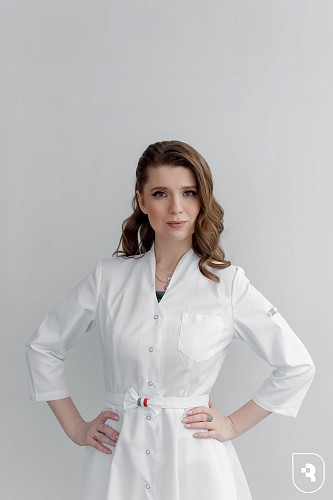
The doctor of Saratov Medical University explained how to choose the best pacifier for a child
21 January 2026
Anna Spivakovskaya, Associate Professor of the Department of Hospital Pediatrics at the Razumovsky State Medical University, shared recommendations for choosing a pacifier that take into account the age characteristics of the child, materials of manufacture and important design elements.
According to the expert, choosing the right nipple is an important task that affects bite formation, speech development and the general condition of the baby's oral cavity. It is necessary to select a pacifier based on the age of the child, the quality of materials, shape, as well as mechanical and chemical safety. Modern manufacturers offer different types of pacifiers for each age group: for babies under 6 months and for older children. Anna Spivakovskaya emphasized that the optimal age for stopping using a pacifier is 1.5-2 years. Its further use is undesirable, as it can lead to the development of a number of pathological conditions: malocclusion and articulation, delayed speech development or impaired nasal breathing.
"Currently, nipples are made from two main materials: latex and silicone. Both are acceptable to use. Despite the fact that latex nipples are more popular with babies due to their better elasticity, they increase the risk of allergic reactions due to the content of protein components. Silicone nipples are tougher, but hypoallergenic and more wear-resistant," says Anna Spivakovskaya.
To prevent dental problems, it is preferable to choose orthodontic shaped nipples. Experts advise paying special attention to the structure of the mouthpiece: it should have ventilation holes, do not cover the baby's nose, do not go beyond the chin and do not create conditions for accumulation of saliva or changes in the skin structure.
"Be sure to pay attention to the chemical composition of the nipple and the labeling, making sure that the product does not contain a substance such as bisphenol-A. This component affects the child's nervous system, causing its depression. It is also a kind of endocrine disruptor, mimicking the effects of estrogens in the baby's body and negatively affecting the endocrine system and metabolic processes of the child's body," warns the expert of Saratov Medical University.
According to the expert, choosing the right nipple is an important task that affects bite formation, speech development and the general condition of the baby's oral cavity. It is necessary to select a pacifier based on the age of the child, the quality of materials, shape, as well as mechanical and chemical safety. Modern manufacturers offer different types of pacifiers for each age group: for babies under 6 months and for older children. Anna Spivakovskaya emphasized that the optimal age for stopping using a pacifier is 1.5-2 years. Its further use is undesirable, as it can lead to the development of a number of pathological conditions: malocclusion and articulation, delayed speech development or impaired nasal breathing.
"Currently, nipples are made from two main materials: latex and silicone. Both are acceptable to use. Despite the fact that latex nipples are more popular with babies due to their better elasticity, they increase the risk of allergic reactions due to the content of protein components. Silicone nipples are tougher, but hypoallergenic and more wear-resistant," says Anna Spivakovskaya.
To prevent dental problems, it is preferable to choose orthodontic shaped nipples. Experts advise paying special attention to the structure of the mouthpiece: it should have ventilation holes, do not cover the baby's nose, do not go beyond the chin and do not create conditions for accumulation of saliva or changes in the skin structure.
"Be sure to pay attention to the chemical composition of the nipple and the labeling, making sure that the product does not contain a substance such as bisphenol-A. This component affects the child's nervous system, causing its depression. It is also a kind of endocrine disruptor, mimicking the effects of estrogens in the baby's body and negatively affecting the endocrine system and metabolic processes of the child's body," warns the expert of Saratov Medical University.